
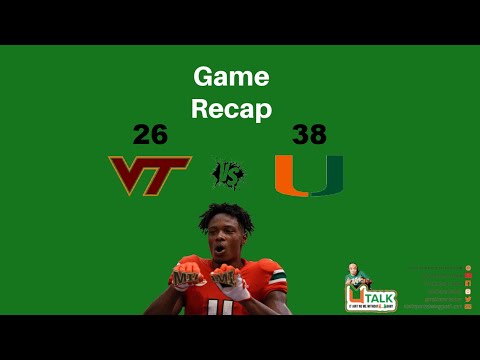
Bowl eligibility is secured. Tyler Van Dyke just stacked his fifth consecutive game of 300-plus yards and multiple touchdowns, a stretch that would headline the season at about ninety percent of programs in this country. And yet the loudest conversation around this football team right now isn’t about the quarterback. It’s about an athletic director nobody has been allowed to name yet, and about a version of Miami football that most of the people arguing about it never actually saw in person.
That’s the fault line. Not talent. Not the arm. The room.
The Van Dyke Problem Nobody Wants To Call A Problem
Let’s start with the good, because it’s genuinely good. Five straight games at 300-plus with multiple scores is not a hot streak, it’s an identity. That’s a quarterback who has stopped playing scared and started playing like the offense belongs to him. In a normal year, at a normal school, that’s the whole story. You build the offseason around it, you sell season tickets on it, you let the kid cook.
Here’s the uncomfortable part: Miami just clinched bowl eligibility, and clinching bowl eligibility at Miami is not an achievement, it’s an attendance record. Six wins is the floor. It’s the thing you’re supposed to clear without anyone noticing you cleared it. When a program has to announce that it made a bowl, that program has quietly redefined what winning means for itself.
So you’ve got a quarterback playing at a level that demands a real supporting structure, sitting inside a structure that is currently celebrating the bare minimum. That’s not a Van Dyke problem. That’s an everything-else problem. And you don’t fix everything-else with a coordinator hire.
The AD Chair Is The Only Job That Matters Right Now
Word going around is that a reputable source has an athletic director already selected, with the announcement parked until after the Duke finale. Take that for what it is — a report, not a press release. But the shape of it tells you something even if the name never lands where people think it will.
An AD hire being sequenced around the end of a football season means somebody understands that the AD hire is the football decision. Not a prelude to it. The AD sets the budget, sets the tolerance for buyouts, sets whether the collective gets treated like a nuisance or an arm of the department, and — most importantly — sets whether the next head coach reports to someone who can absorb a bad October without panicking.
Miami fans have been trained by two decades of experience to skip straight to the coaching search. Who’s the name. Who’s the splash. That instinct is exactly backwards. A big-name coach hired by a weak AD is a countdown clock. A merely-good coach hired by a strong AD, given real money and real patience and real infrastructure, is how you actually rebuild. Ask anybody who’s watched a program crawl out of the basement — it’s never the presser that fixed it. It’s the org chart.
So when the name finally drops after Duke, the question shouldn’t be “is this guy exciting?” It should be: does he have the standing to tell a booster no, and does he have the standing to tell a coach yes?
What The ’80s Actually Teach — And What They Don’t
Here’s where I want to be careful, because the nostalgia lane is a trap and this fanbase lives in it rent-free.
Guys from those championship teams will tell you flat out: they feared their coaches. They weren’t buddies with them. They didn’t joke with them. It was business on the field, full stop. Howard Schnellenberger walked into a locker room and the room went silent — not out of politeness, out of something closer to gravity. Jimmy Johnson stood in front of his very first Miami team and told them, plainly, that he would have favorites, and that anybody who didn’t like it could go find another school.
Now. The lazy read on that is “today’s players are soft, bring back the fear.” That’s not the lesson, and honestly it’s not even available anymore. The transfer portal exists. NIL exists. A coach who runs a 1984 locker room in the 2020s doesn’t build a dynasty, he builds a mass exodus by February.
The real lesson underneath the fear is clarity. Look at that Jimmy Johnson speech again. He told a room full of grown men the exact terms of the deal on day one: production earns favor, favor earns snaps, and if that arrangement doesn’t work for you, the door is right there. Nobody in that room had to guess where they stood. Nobody got strung along for three years by a coach who was too conflict-averse to tell them the truth.
That’s not fear. That’s an honest depth chart. And it’s the single most portable thing from that era into this one.
Because here’s what actually drives players into the portal, and it isn’t discipline — it’s ambiguity. It’s being told you’re in the mix, then watching a freshman take your reps without explanation. It’s a position coach who won’t have the hard ten-minute conversation. Players in 2021 will absolutely run through a wall for a coach who is brutally direct with them. What they won’t tolerate is being managed instead of coached.
The Schnellenberger version of that was silence and dread. The modern version is a coach who looks you in the eye, tells you exactly what’s blocking you, gives you a real timeline, and then honors it. Same product, different delivery. The programs winning right now have figured that out. Miami hasn’t.
The Institutional Memory Gap Is Real And It’s Fixable
There’s a separate thing worth naming: this roster is further removed from the program’s history than any Miami roster has ever been. Not emotionally — literally. A freshman on this team was born closer to Miami’s last national title than to Schnellenberger’s first one, and the last title was 2001. Those banners are ancient history to a nineteen-year-old, and pretending otherwise is how you get players who wear the U without knowing what it cost to build it.
The alumni want back in. That’s not speculation — you can see it in the fact that the guys from those teams keep organizing themselves, keep gathering in rooms, keep doing round-tables and documentaries and podcasts to preserve the story on their own. Mel Bratton has a whole alumni special coming with Brett Romberg, Earl Little, Jesse Armstead, Eddie Brown, Lamar Thomas, Randall Hill, Alonzo Highsmith, Andrew James — that’s not a nostalgia project, that’s a room full of institutional knowledge that the athletic department is not currently drawing on in any structured way.
Some of the best-run programs in the country have formalized this. Former players have building access, standing invitations, defined roles. Not as mascots — as a permanent memory bank the current roster can actually touch. Miami has more of that raw material than almost anyone alive, and it’s mostly organizing itself on private apps and podcasts instead of inside the facility.
Whoever takes that AD chair inherits a fixable version of this. Bring the alumni inside the walls. Give them a lane. Let a nineteen-year-old defensive end hear from the guy who actually played the position here what the standard was — not as a highlight reel, as a conversation. That costs almost nothing and it’s the cheapest culture investment available.
The Bar Going Forward
Bowl eligible is fine. Van Dyke’s five-game run is better than fine. But the honest measure of this stretch isn’t the record — it’s whether the next hire understands that the fix is structural, not cosmetic.
Clarity from the top. Money behind it. The people who built this thing given a real seat at the table. Do that and the fear takes care of itself, because fear was never the point. Standards were.
This take grew out of the November 23, 2021 episode of U Talk Live, where Devin and Larry Frank Jr. were joined by Melvin “Mel B” Bratton for a long, unfiltered conversation about the Schnellenberger and Jimmy Johnson eras — and what the current program has and hasn’t kept from them.
This take grew out of the November 23, 2021 episode — watch it here: Miami Hurricanes U TALK LIVE-113