
Every spring, somebody at a pro day runs a number that lights up a room. Phones come out. Group chats catch fire. A time gets screenshotted and passed around Coral Gables like contraband. And every spring, a certain kind of Cane fan decides right then and there that the kid is a first-rounder, book it, done deal.
Melvin “G5” Bratton would like a word.
Not because he’s a hater — the man bleeds orange and green and has since before some of you were born. But because he spent five drafts on the personnel side of this business, running pro days for the Rams, for Washington back in that era, and for the Falcons. He wasn’t in the stands. He was on the field with a stopwatch and a clipboard and a set of questions that a 40 time cannot answer.
The stopwatch is the appetizer
Here’s the thing nobody explains to fans, and honestly, nobody explains it well enough to some prospects either. A blazing 40 doesn’t end an evaluation. It starts one.
Think about what actually just happened when a defensive back rips a fast time in front of 30-plus teams. Every scout in that building just moved that kid from “guy on the list” to “guy I need to know about.” The general managers who were half-watching are now fully watching. The position coaches who came to see somebody else are now leaning in. You didn’t close the deal. You just got everybody’s attention at the exact moment you’d better have something else to show them.
And that’s where the drills come in. That’s the part that gets skipped, and that’s the part Bratton keeps circling back to, because he’s watched it cost people real money.
What they’re actually looking for out there
Straight-line speed is a physics measurement. Football is not played in a straight line, and it is definitely not played in a straight line if you’re a corner or a safety.
So when a scout gets a DB in position drills, he’s watching things a stopwatch is structurally incapable of measuring. How does the hip flip? Is it smooth, or is there a hitch — a half-count where the body has to reset before it can go? How does he transition out of a backpedal? Can he open at 45 degrees and drive without losing ground? Does the speed you just clocked in a straight line survive contact with a change of direction, or does it evaporate the second the body has to do two things at once?
That’s the actual interview. Not the handshake at the hotel. Not the number on the card. The drills.
And here’s the part that makes the pro day so much more valuable than the combine for a certain kind of prospect: the combine is coaches watching from the stands. It’s a stadium event. It’s television. Pro day is hands-on. Those same evaluators are standing five feet away from you, running you themselves, in some cases coaching you through a rep just to see how fast you absorb a correction. That proximity is the whole point. That’s data you cannot get from a broadcast angle.
Which is why declining to do position work after a big number is such a costly instinct. The logic sounds reasonable — protect the time, don’t muddy a great result, leave on a high note. Bratton’s counter is simple and it comes from having sat in the room: you didn’t leave on a high note, you left an unanswered question. And unanswered questions get resolved by whoever’s willing to answer them.
“It ain’t over until they call your name”
That’s the line, and it’s not a motivational poster. It’s a job description.
The evaluation window does not close when the season ends. It doesn’t close at the combine, it doesn’t close at pro day, it doesn’t close after a good interview. It runs — continuously, without a break — from a prospect’s last collegiate snap all the way to the moment a card goes to the podium with his name on it. Every workout, every phone call, every visit, every conversation somebody in the building has about you when you’re not there. All of it is live.
Most young players understand this intellectually. Very few live like it’s true. The ones who do tend to go higher than their tape says they should.
Why the Miami pro day room was packed
Here’s a detail that’s easy to miss if you’re just consuming numbers: the size of the crowd is itself a piece of information.
Programs that produce one late-round guy get a polite turnout — area scouts, maybe a position coach passing through. Programs that produce genuine first-round talent get something else entirely. Position coaches, coordinators, and yes, head coaches. Head coaches do not fly out to watch a seventh-rounder do a shuttle. They fly out because there’s a player in that building who could start for them in September.
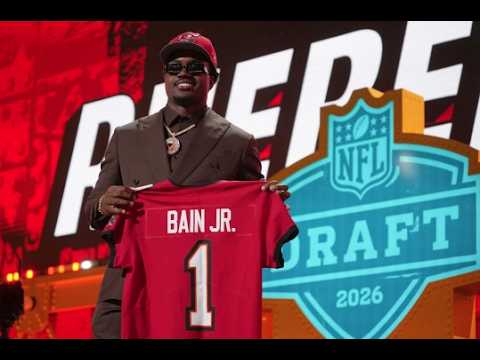
With Rueben Bain in the mix and multiple Canes projected high, Miami got the packed-house version. That’s not a fan-forum talking point. That’s the league voting with its travel budget. And it’s the clearest signal yet that the pipeline — the actual, functioning, produces-pros-every-year pipeline that made this place what it is — is running again after too many seasons where it sputtered.
The proof of concept
Bratton has a client story he leans on here, and it’s the cleanest possible argument for trusting the process over the panic.
Josiah Trotter got hurt late in the season. Couldn’t fully test. Missed the window that the entire modern draft-industrial complex tells kids is make-or-break. No signature number to wave around, no viral clip, none of it.
He went 46th overall. Second round. Tampa Bay.
Sit with that for a second, because it cuts both directions. If a guy who couldn’t test at all can go in the top 50 on the strength of his tape and how he handled the process, then the number was never the load-bearing wall to begin with. The tape is. The evaluation is. The way you carry yourself through four months of being examined is. Testing is one input among many, and it’s not even the most important one.
Which means the fast time is a gift — but only if you use it. Run the number, then go answer the questions the number raised. Do the drills. Take the correction. Finish the evaluation the right way. That’s how a good time turns into a good pick instead of a good story.
What this actually means for the class
Three more dogs headed to the league out of this 2026 cycle, and the buzz coming out of that pro day is real. But the takeaway isn’t “our guy ran fast so he’s a first-rounder.” The takeaway is that Miami is once again a place where the people holding the draft cards feel obligated to show up in person. That’s the asset. That’s what took years to rebuild.
The individual outcomes will sort themselves out on draft night. Some guys will go higher than the boards say. Some will slide and make a team regret it for a decade. That’s the business. But the fact that every chair in the building was full? That part is the program telling you exactly where it stands.
Fast is good. Fast is a door opener. Just don’t confuse the door for the room.
This take grew out of this week’s U TALK LIVE follow-up conversation with Melvin “G5” Bratton, who spent five drafts on the personnel side before he ever picked up a microphone — a rare look at how the men holding the cards actually think.
This take grew out of the May 9, 2026 episode — watch it here: U TALK LIVE-270 Follow up show Snippet 1 With G-5 Melvin Bratton