Somewhere in the last five years, sports media decided the audience was a metric. Not people — a number that goes up when you post the right clip and down when you don’t. Everything got optimized. Everything got smoothed. And somewhere in that smoothing, the thing that made local sports talk worth anything in the first place got sanded clean off.
Then you hear a show open with “this ain’t just a podcast, it’s family,” and you remember what the whole thing was supposed to feel like.
The Line That Gives The Game Away
“There ain’t no me without you, baby.”
Read that flat and it’s a hook. Read it as a mission statement and it’s the most honest sentence anybody in this space has said out loud in a while. Because most media outfits operate on the exact inverse premise: there is very much a me without you. The me is the brand. The you is traffic. The you is interchangeable, replaceable, and mostly there to be counted.
U Talk built its front door around the opposite claim. Not “thanks for watching.” Not “smash that like button.” A flat declaration that the show does not exist as a separate object from the people consuming it. That’s a heavier thing to promise than it sounds, because it means you can’t hide behind the format when the take goes bad. If there’s no me without you, then you answer to the room. Every week.
Why This Matters Right Now, In 2025
Look at where Canes fandom actually sits heading into the 2025 season. The program has spent the better part of two decades cycling through hope, disappointment, coaching change, recruiting-class-as-salvation, and the annual September ritual of deciding whether this is finally the year. If you’ve been around, you know the emotional muscle memory. You know the specific flavor of guarded optimism that lives in a Miami fan’s chest in late August.
National media cannot hold that. It’s not built to. National media shows up when Miami is relevant to a playoff conversation and vanishes the second it isn’t, and in between it recycles the same three storylines about the U’s past like it’s a documentary rerun. It talks about the fanbase. It never talks with it.
That gap is the entire business case for a show like this, and it’s why the anthem functions as more than intro music. It’s a filter. It tells you in the first fifteen seconds what kind of room you walked into. Either you’re an audience or you’re family, and the show picked a side before a single word of analysis got spoken.
The Amateur Line Is The Thesis
There’s a bar in that intro that deserves more attention than it gets: all these amateurs been winning for too long so they had to change the parameters.
That’s not a throwaway flex. That’s a diagnosis of an entire industry. The parameters did change. Sports commentary used to require you to actually know something — to have watched enough football that you could tell a scheme problem from a talent problem, to have sat through enough bad seasons that you’d earned the right to be mad about this one. Now the parameters reward volume, speed, and a willingness to say something loud about a team you’ve watched twice.
The amateurs won because the scoreboard changed. And the response embedded in that verse isn’t “we’ll play the new game better.” It’s “we’re sweeping them up like janitors” — which is to say, we’re not adjusting to your parameters, we’re outworking you inside ours. Knowledge. Reps. Relationship. The unglamorous stuff that doesn’t trend but does compound.
Mr. Magic Said The Quiet Part
The endorsement in that intro is deceptively simple. A podcast that’s real and down to earth. Two words that get thrown around so casually they’ve lost their edge — so let’s put the edge back on.
Real means the take you hear is the take that was actually held. Not focus-grouped, not softened for access, not adjusted because somebody in the building might get annoyed. Down to earth means nobody’s performing expertise from a height. The host isn’t above you in the hierarchy of fandom; he’s in the same section, eating the same bad losses, arguing the same arguments you’re having in your group chat.
Those two qualities are cheap to claim and expensive to maintain. Every show says it’s real until the moment being real costs something. The test isn’t the intro — the test is week eight, when the team’s underperforming and the honest read is unpopular with the exact people who show up every week. That’s when you find out if “ain’t no me without you” means accountability to the room or just flattery of it.
Frank And Devin, Live — And Why “Live” Is The Whole Point
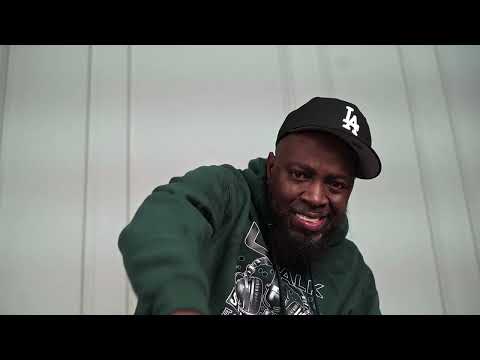
Coming to you live with Frank and Devin. It’s the people show, baby.
Live matters more than the format nerds admit. A recorded, edited, packaged show is a monologue delivered at you. A live show is a conversation you can walk into. It’s messy. Somebody talks over somebody. A take gets challenged in real time by a name in the chat. Nothing gets cut for time because there is no cutting.
That mess is the product. It’s the thing you cannot replicate with a bigger budget, because the bigger the budget, the more incentive there is to clean it up — and the cleaned-up version is exactly the thing nobody’s loyal to. Nobody has ever felt like family toward a well-produced segment.
What A Fanbase Actually Needs
Here’s the part that goes beyond one show. Miami fandom is not short on content in 2025. It is drowning in content. Highlight accounts, aggregators, recruiting scoops recycled six ways, prediction-machine hot takes generated by people who could not name the starting interior offensive line.
What it’s short on is a place. A consistent, weekly, named room where the same voices show up and the same people show up to hear them, where the history of the conversation carries over from one week to the next because everybody was there for last week too. That’s not a content problem. That’s a community problem, and content doesn’t fix it — ritual does.
Which is why an anthem is a strategically serious thing and not just branding. Anthems create ritual. You learn the words, you sing them, and the singing is the membership. It’s the same reason a stadium chant matters more than a stadium ad. One is something you receive. The other is something you do, and doing is how belonging gets built.
The Bet
So here’s the bet U Talk is making, stated plainly: that in a market saturated with reach, the scarce resource is relationship. That a thousand people who’d defend your show in an argument beat a hundred thousand who scrolled past it. That the number one podcast in the show isn’t a chart position, it’s a claim about who’s in the room.
It’s the harder bet. Reach is buyable. Relationship isn’t — it has to be earned in public, weekly, through seasons that don’t go the way anybody wanted. But it’s also the only bet that survives a bad year, and if you’ve followed this program long enough, you know bad years are part of the deal.
Crank it up. Learn the words. That’s not marketing copy — that’s the entry requirement.
This take grew out of this week’s U Talk episode, which put the full intro anthem front and center. Sometimes the mission statement is hiding in the theme song.
This take grew out of the August 29, 2025 episode — watch it here: U TALK! The Peoples Show!