
There’s a version of Miami Hurricanes history that gets told at tailgates and in highlight packages, and it goes something like this: a group of guys who were never afraid of anybody walked onto every field in America and dared the other team to do something about it. The swagger was innate. The confidence was a birthright. They didn’t blink because blinking wasn’t in them.
It’s a great story. It’s also, according to a man who was actually in the huddle, not quite the whole truth.
Melvin Bratton — a back whose name still gets said with a certain reverence around here — was asked recently about a specific stretch of Miami history that doesn’t make the highlight reels: the run where the program came up 0 and 5 against Barry Switzer. Five times against Oklahoma. Five times walking off. That’s not a slump, that’s a pattern, and patterns get inside your head in a way single losses never do.
His answer was four words long and it reframes everything.
“I was scared to death.”
The Part Nobody Puts on a Poster
Think about who’s saying that. Bratton is remembered as one of the physical embodiments of Miami football — a downhill, contact-seeking, get-out-of-my-way kind of player who came up in an era where the Canes’ entire brand was built on refusing to be intimidated by anyone in any stadium in the country. If there was a list of guys you’d expect to say “nah, I never worried about Oklahoma,” he’d be near the top of it.
Instead he said the quiet thing out loud, decades later, with nothing to gain from saying it. And then he started to explain why — “I know what kind of team…” — which tells you the fear wasn’t vague. It wasn’t nerves. It was informed. He’d seen the film. He’d been on the field. He knew exactly what was on the other side of that line of scrimmage, and knowing is what made it scary.
That’s a completely different kind of admission than “we were a little nervous.” That’s a player telling you he had accurate information about how hard the task in front of him was going to be, and that the accurate information terrified him.
Why This Matters More Than the Swagger Story
Here’s why I keep chewing on this in September of the 2025 season, forty-odd years removed from the moment he’s describing.
The mythology of those Miami teams has been sanded down into something almost cartoonish. Fatigues. Trash talk. Attitude. And because that’s the version that got repackaged and sold, an entire generation of fans — and, more dangerously, an entire generation of people trying to rebuild programs — walked away thinking the swagger was the cause. Act fearless, become fearless, win.
Bratton just told you it was the other way around. The swagger was a byproduct. The fear came first, and what the program actually did was build a machine capable of surviving the fear.
Because look at what happened after that 0 and 5. Miami didn’t stay 0 and 5. The program that was scared to death of Barry Switzer’s Oklahoma teams became the program that everybody else was scared to death of. That transformation is the actual story, and you can’t tell it honestly if you pretend the starting point was invincibility. Nobody starts at invincible. You start at scared and you work.
Fear as a Scouting Report
There’s a real football lesson buried in “I know what kind of team.”
Fear, in the way Bratton describes it, is diagnostic. It’s a player’s honest internal assessment of a gap. And the teams that get better are the ones that let that assessment be honest instead of shouting over it with team-meeting bravado. If you convince yourself you’re fine, you fix nothing. If you sit in a locker room genuinely afraid of the guys across from you, you’ve just been handed a to-do list — get stronger there, get faster here, close that gap, close it now.
The Miami teams that eventually flipped the script didn’t do it by feeling better about themselves. They did it by becoming a different football team. The confidence that came later was earned collateral, not a mindset hack.
And I’d argue that’s the single most useful thing a Miami fan can carry into any season, including this one. Confidence that isn’t backed by the work is just noise. Confidence that comes out the other side of “we were scared and then we fixed it” is the thing that wins in November.
The Honesty Gap
The other reason this hits is where it came from. You do not get “I was scared to death” from a podium. You get it in a room where somebody’s actually listening.
Modern sports media has an incentive structure that punishes this kind of candor. Everybody’s media-trained, everybody’s got a brand to protect, everybody knows a clip can be sliced and weaponized before the interview’s even over. So you get the safe version. “We respected them. We knew we had to execute.” Nothing. Zero nutritional content.
Meanwhile the actual history — the emotional truth of what it felt like to be nineteen years old and know you were about to get hit by the best team in the country — lives in the memories of guys who mostly never get asked. And when they do get asked, it’s usually by somebody who wants the highlight, not the feeling.
Bratton being willing to say it, and being asked in a way that made saying it possible, is the kind of thing that should happen a lot more than it does. Every one of those admissions is a piece of the real record. And the real record is more interesting than the myth, because the myth is a poster and the record is a blueprint.
What I’d Ask Next
If I had the chair, the follow-up isn’t about Oklahoma. It’s about the turn. What was the practice, the meeting, the week where the fear stopped being paralyzing and started being fuel? Because there had to be one. Programs don’t drift from 0 and 5 into an era. Somebody decided something, and somebody did the work, and there was a first day of it.
That’s the piece of Miami history I want preserved while the people who lived it are still here to preserve it. Not the swagger — we’ve got the swagger on tape from a hundred angles. The mechanics. The scared-to-death-to-not-scared-of-anybody conversion process, told by the people who went through it.
Because that’s the part that’s actually transferable. Attitude can’t be borrowed. Method can.
The Long Memory
Miami fans have a complicated relationship with the past. It’s the standard we measure everything against and it’s the weight we drag around, sometimes in the same breath. And I think part of why it feels so heavy is that we’ve been comparing present-day teams to a version of history that never existed — a version where the guys in the fatigues never doubted, never sweated, never sat in a locker room with their stomach in knots because they knew exactly what was coming.
They did. One of them just said so.
Somehow that makes the whole thing bigger, not smaller. The banners get more impressive when you find out they were hung by people who were terrified and did it anyway. That’s not a downgrade of the legend. That’s the legend finally making sense.
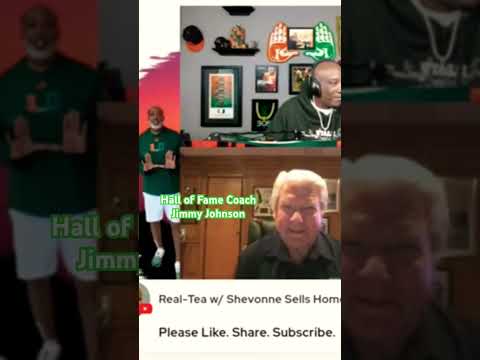
This take grew out of this week’s U Talk Sports Show episode, where Melvin Bratton and Hall of Fame coach Jimmy Johnson sat down for the kind of loose, unguarded conversation that shakes these admissions loose. Worth your time — the stories in there hit harder than any stat sheet.
This take grew out of the August 31, 2025 episode — watch it here: The Goat Melvin Bratton & Hall of Fame coach Jimmy Johnson was HILARIOUS!! #utalk #utalksportsshow