
Here is the number that should stick with you long after any conversation about mortgages: zero. That is how many dollars separate a person who walks into a closing from a person who talks themselves out of one two days before the ink hits the page. Same file. Same pre-approval. Same house. Different nerve.
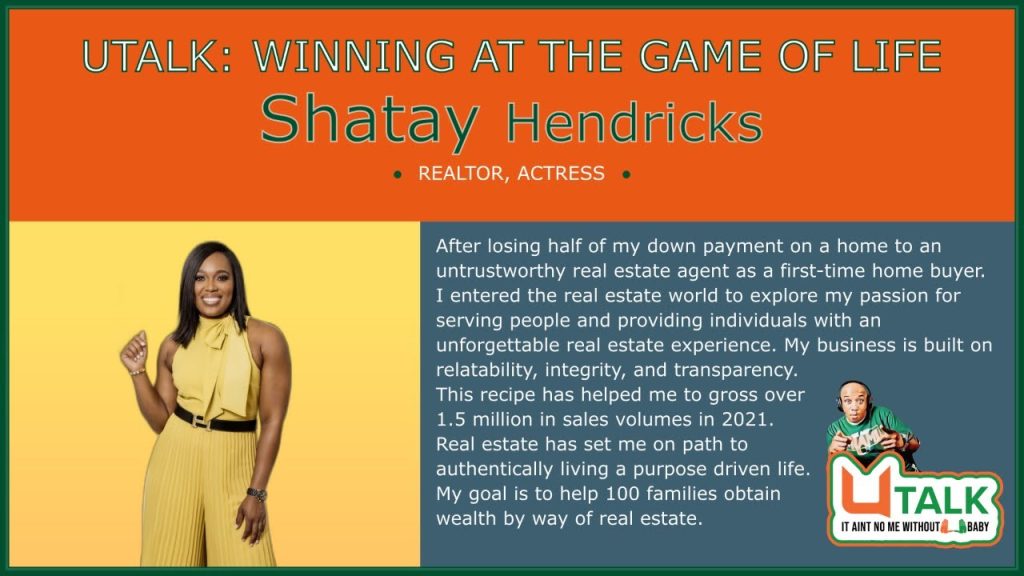
Shatay Hendricks — realtor with Elite Realty Partners, actress, and a former state champion sprinter out of St. Thomas Aquinas who ran at Stanford — was asked what the hardest part of her business is. Not the paperwork. Not the underwriting. Not the inspection surprises. Fear. She has watched a deal die 48 hours from the finish line because the buyer got in their own head. And if you have ever coached anybody, played anything, or watched a team collapse in the fourth quarter, you already know exactly what she is describing. Nobody blew a coverage. Somebody blinked.
The Real Estate Version of the Yips
Sports gave us the vocabulary for this before finance ever did. We know what it looks like when a guy who has drained a thousand free throws in an empty gym cannot get one to fall with 12 seconds left. We do not say he forgot how to shoot. We say the moment got big. Home buying is the same phenomenon wearing a blazer. The math does not change between pre-approval and closing day. The stakes do not change. What changes is that the abstraction becomes real, and real is heavier than a spreadsheet.
What makes Hendricks a credible voice on this is that she has lived the version where the fear was justified. Her first attempt at buying a home ended with a realtor she trusted scamming her out of half her escrow deposit. That is not a hypothetical worst case. That is the actual worst case, and it happened to her before she was ever on the other side of the table. The interesting part is what she did with it. She did not conclude that the game was rigged and go find something safer. She went and got licensed.
That is the difference between fear as information and fear as a verdict. Fear as information tells you to vet the person handling your money. Fear as a verdict tells you the whole enterprise is a trap and you should keep renting forever. Most people cannot tell the two apart, which is why they treat every hesitation as wisdom.
She Has Already Quit Something Harder Than This
Track ended for Hendricks the way it ends for most people who are actually good — injuries, not a lack of talent. A pro career, and later an Olympic run, got closed off by a body that would not cooperate. Anybody who has competed at a real level understands that specific grief. You do not just lose a sport. You lose the identity, the schedule, the built-in scoreboard that told you every week whether you were winning.
Then she spent years in law enforcement — 911 dispatcher, child protective investigator, patrol officer, detective. That is not a resume. That is a tour through some of the most emotionally corrosive work a person can do, the kind of jobs where the fear is not psychological, it is Tuesday. And then she walked away from the pension, the badge, and the certainty to go be an entrepreneur.
So when she tells a caller that the thing standing between them and a house is not money, take the source seriously. This is a person with an unusually well-calibrated instrument for measuring what is actually dangerous. She has been in rooms where things went wrong in ways that mattered. A mortgage application is not one of those rooms.
The Plan Is the Antidote, Not the Pep Talk
The reason fear wins in real estate is that most people are fighting it with feelings instead of with structure. They hype themselves up, they get a burst of confidence, they start looking at listings, and then the first hard number knocks the wind out and the whole thing deflates. Confidence without a plan is a sugar high.
Hendricks’ pitch is the opposite: most people do not need more money, they need a plan and somebody holding them accountable to it. That is coaching language, and it is correct. A plan converts a terrifying blob into a sequence of small, boring, checkable tasks. Get the score to 580 at bare minimum for an FHA loan, but aim for 680 and up. Get card utilization under 30 percent. Understand that closing costs run roughly 4 percent of the purchase price and sit on top of a 3.5 to 5 percent down payment, so the real number you are saving toward is not the one in your head. Find out whether Hometown Heroes applies to you, because up to $25,000 toward a down payment is not a rounding error. Ask about rapid rescore before you go get pre-approved instead of after.
None of that is inspirational. That is the point. You cannot panic your way through a checklist — you either did the item or you did not. Structure starves fear of the vagueness it feeds on.
The Bad Advice You Inherited
There is a second, quieter enemy here, and it is worth naming because it wears the costume of a friend. It is the outdated advice you got from someone who loves you. The seven-years-and-it-falls-off theory about collections. The idea that FHA loans are somehow second-class or a red flag. These are things people repeat with total confidence at family functions, and Hendricks flags both as wrong or badly out of date.
That is a particular kind of trap, because it does not feel like fear. It feels like being informed. You are not scared, you are just waiting — waiting for the collection to age off, waiting until you can do it the right way with the conventional loan and the 20 percent down, waiting until you feel ready. Meanwhile the market does not wait, and the version of you that could have bought three years ago is now looking at the same house for more money.
Bad information is fear with a better publicist. The only fix is asking somebody whose job is knowing the current rules rather than somebody whose knowledge peaked in a different decade.
Winning the Game of Life Is Mostly Not Flinching
The tidy lesson would be that Hendricks is a great salesperson, so of course her answer is that the barrier is mental. But look at her actual track record and the pattern is not sales, it is repetition. State champion. Stanford. Injury. Law enforcement, four different roles, including two that most people could not do for a month. Scammed out of escrow money. Licensed anyway. Building a business anyway.
Every single one of those transitions had a version where she stopped. Nobody would have blamed her at any of them. The through-line is not that she never felt fear — it is that she never let it be the deciding vote.
That is the whole thing, and it applies whether the goal is a house, a business, or a season. The plan handles the math. Somebody in your corner handles the accountability. Your only job on closing day is to not talk yourself out of it.
This take grew out of a Tuesday business-night conversation on U Talk: Winning At The Game Of Life, where Devin and Larry Frank Jr. spent nearly the full show with Shatay Hendricks while the call-in line stayed lit.
This take grew out of the August 31, 2022 episode — watch it here: U TALK Winning at the game of life- Shatay Hendricks