
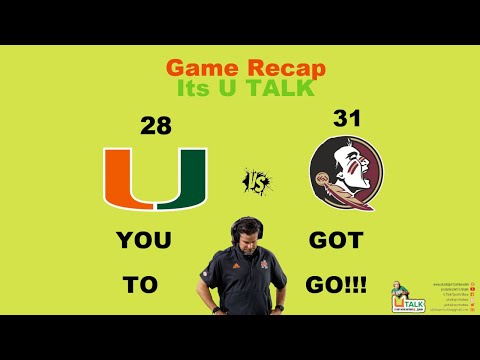
Here’s the uncomfortable truth Canes fans have been circling for years, finally sitting in the middle of the room: the coach was never the whole problem. The building was. And now that Blake James is out as athletic director, Miami is staring at the one hire that actually determines the next decade — and it isn’t a coach.
Everybody wants to argue about the goal-line call. Everybody wants to relitigate fourth-and-14. That’s fine, that’s what November is for, that’s what the phone lines are for. But the fourth quarter of a loss to Florida State is a symptom. The chair Blake James just vacated is the disease — or the cure. Miami gets exactly one swing at this, and the swing has to land before anybody puts a headset on a new staff.
Why the AD Hire Comes First — and Why Order Matters
Think about the sequencing for a second, because it’s the whole ballgame. If you hire a coach first and an athletic director second, you’ve just handed your new AD a staff he didn’t pick, a contract he didn’t negotiate, and a mess he’ll be blamed for. That’s how you get a guy managing somebody else’s decision for three years and then firing his way out of it in year four. Miami has run that play before. It doesn’t end well.
Hire the AD first, and everything downstream gets cleaner. The AD owns the search. The AD owns the buyout math. The AD owns whether the coordinators get bought out or brought back. The AD owns the answer to the question that’s actually been killing this program: who is accountable when the plan fails? Right now nobody is. That’s not a hot take, that’s just an org chart problem, and org chart problems don’t fix themselves because you changed the guy holding the play sheet.
Whoever takes this chair inherits total control over the fate of the coaching staff. That’s enormous leverage and it should terrify you a little. The wrong hire doesn’t just waste a cycle — the wrong hire makes the next four hires worse, because a weak AD hires a coach who can outmuscle him, and then you’re right back to a program run by whoever is loudest in the room.
The Names on the Board, and What Each One Actually Means
Three names keep coming up, and they’re not interchangeable. They represent three completely different bets on what Miami thinks it is.
Alonzo Highsmith. The Miami bet. The blood bet. A guy who bled for this program, who knows what the U is supposed to feel like, who understands that this fan base doesn’t want a mission statement, it wants a swagger. The upside is emotional alignment and a recruiting pitch that sells itself in Dade and Broward. The risk is obvious and you already know it: passion is not the same as running a nine-figure athletic department. If you make this hire, you’d better staff around him with operators who can handle the compliance, the budgets, the facilities capital campaign — the boring stuff that decides whether your football team has a nutrition program worth a damn.
Mack Rhoades. The professional bet. A sitting Power Five athletic director at Baylor — meaning he’s already done the job at a level where the results are on the scoreboard and the checkbook. This is the hire you make if you’ve concluded that Miami’s problem is competence, not culture. It’s the least romantic option and probably the most defensible one on a whiteboard. The question is whether an outsider walks into Coral Gables understanding that this place has a different metabolism than anywhere else. You can’t run Miami like it’s a normal athletic department. It never has been one.
Dan Morgan. The blended bet. Miami DNA plus front-office pedigree — somebody who’s operated inside professional football’s evaluation machinery, where you either identify talent correctly or you get fired. That’s a different muscle than most college ADs have, and honestly it might be the most relevant one in a world that’s rapidly turning into free agency with a mascot. The catch is that pro front-office work and running a full athletic department are not the same job. Football is one line item. There’s a whole department behind it.
Pick your poison, but pick with your eyes open. Every one of these three is a bet on a theory of the case, and Miami had better be able to articulate its theory before it makes a call.
The Real Job Description Nobody Is Writing Down
Forget the press release language. Here’s what the next AD actually has to do, in order:
One: build a real evaluation process. Not a gut feel. Not a friend-of-a-friend recommendation. An actual framework for judging whether a coaching staff is doing its job — one that would have flagged, in October, that a defense wasn’t stopping anybody and that situational football wasn’t being scripted. If your evaluation process only kicks in after a November loss to Florida State, you don’t have a process. You have a mood.
Two: define what winning looks like, out loud. Miami’s standard has been vibes-based for twenty years. Everybody says “championships” and nobody says what the two-year checkpoint is. The next AD needs to put a number on it and then live and die by it publicly. That’s the only way accountability stops being a word fans yell and starts being a thing the building does.
Three: fix the infrastructure gap. Facilities, staffing depth, support systems. The stuff that doesn’t show up in a highlight package but absolutely shows up in the fourth quarter of a rivalry game. You cannot out-scheme a resource deficit forever.
Four: understand that Miami is a national brand being run like a regional program. That gap is the entire opportunity. Whoever closes it wins. Whoever doesn’t is the next name in this same column two years from now.
The Part Where Fans Have to Be Honest Too
One down, one to go. The Duke finale is coming and everybody knows what it means — it means the administration finally has cover to do what it should have done with a clear head instead of under November pressure.
But here’s the mirror moment. This fan base has a habit of treating every firing like a championship. It isn’t. Removing a problem is not the same as installing a solution. Blake James being gone is the start of the work, not the payoff for it. If Miami hires the wrong AD in December and the wrong coach in January because everybody was too busy celebrating in November, we will be right back here — same phone lines, same arguments about scheme versus execution, same autopsy with different names on the toe tag.
The Cane City faithful have earned the right to be loud about this one. Just be loud about the right thing. Not the goal-line call. Not the coordinator. The chair. Because for the first time in a long time, Miami actually has the ability to build this correctly from the top down instead of patching it from the middle out.
One hire. That’s it. That’s the whole thing. Get it right and the coaching search takes care of itself. Get it wrong and none of the rest of it matters.
This take grew out of this week’s U TALK LIVE, where the family spent the night working through what a vacant AD chair really means for the future of the program.
This take grew out of the November 16, 2021 episode — watch it here: Miami Hurricanes U TALK LIVE-111