
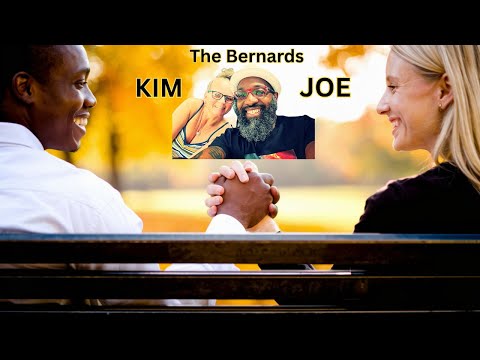
There’s a particular kind of courage nobody hands out trophies for. It doesn’t happen on a field. It doesn’t happen under lights. It happens in a grocery store aisle in rural Virginia when a friend leans in and says, quietly, don’t hold hands in here — and you have to decide, in about a second and a half, whether you’re going to shrink or stand.
That’s the conversation Real Talk waded into on the U Talk Network this week, and I want to sit with it a minute longer than the recap did. Because the easy version of this story — the one America likes to tell itself in June of 2025 — is that interracial love is a solved problem. Loving v. Virginia was 1967. That’s fifty-eight years. We’ve had the movies, the commercials, the Cheerios ad and the internet meltdown that followed it. Surely by now it’s just… love?
The Lie of the Solved Problem
Here’s what I keep chewing on. The most damning detail from that whole conversation wasn’t a story from 1995. It was a drive-thru worker refusing service. Recently. Now. In the year we’re living in.
That’s the thing that ought to rattle people who thought this file was closed. Not the historical horror — everybody’s braced for the historical horror. It’s the ordinary, present-tense, pull-up-and-order-a-number-three moment where somebody looks at two people in a car and decides they don’t deserve a meal. That’s not a museum exhibit. That’s Tuesday.
And the couple at the center of it — Joseph and Kimberly Bernard, thirty years together, nearly twenty-five married — didn’t come on to litigate whether racism exists. They came on to describe the weather. Because when you’ve lived inside it that long, it stops being an argument and starts being a forecast. It’s still here. It ain’t going nowhere. You dress for it.
The Part Nobody Warns You About: It Comes From Inside the House
Every conversation about interracial relationships defaults to the same imagined villain — the stranger, the slur, the guy who spits at your feet outside a video store. And yes, that guy exists; he showed up in their story too.
But the wound that actually reshapes a family isn’t the stranger. It’s the aunt. The cousin. The Thanksgiving table.
The hardest thing said all night was that their children’s first experience of racism came from inside both families. Not from a rally. Not from a bad neighborhood. From people who share their blood and their last names and were supposed to be the safe ones. Read that twice. A kid’s introduction to being unwanted arrived wrapped in a hug from a relative.
That’s a specific and brutal math that couples in these relationships have to do and nobody else does. You can pick your friends. You can move away from a hostile town. You cannot un-родstvo a grandparent. So you either build a wall inside your own family tree or you let your children absorb the damage, and neither option is clean.
“Too Dark for One Side, Too Light for the Other”
And the children. Lord, the children.
This is where I think the culture is most guilty of cheap optimism. We’ve spent a decade celebrating mixed kids as the aesthetic future — the beautiful proof that we’re evolving, the census category that’s supposed to fix everything. Very nice. Very tidy.
What the Bernards described is the actual experience underneath the marketing: a child who is too dark for the white side and too light for the black side. Not belonging twice. Being told, by two different communities, in two different vocabularies, that you’re an approximation of something rather than the whole thing.
Kim said her father warned her — think about the children — and she didn’t understand him until she became a mother herself. I want to be careful here, because that line gets weaponized constantly by people who don’t actually care about children and just want a respectable reason to object. But there’s a version of that warning that’s real, and it isn’t don’t do this. It’s know what you’re signing them up for, and be ready to be their armor.
Big difference. One is a stop sign. The other is a packing list.
The Attack She Didn’t See Coming
The most human moment of the night, and the one I suspect will stay with listeners longest, came from a direction the script doesn’t prepare you for.
Kim talked about verbal attacks from women of color — the accusation that he’s only with you because you’ll do what we won’t. Years of that. And it fed a quiet depression she carried without announcing it, because who do you tell? The people outside don’t get it. The people inside are the ones saying it.
What strikes me is how that particular arrow is engineered. It doesn’t attack the relationship; it attacks her worth inside it. It says: you’re not chosen, you’re convenient. You’re not loved, you’re a workaround. That’s designed to rot a person from the middle out, and it did its work for years.
Her way out wasn’t a clapback. It was deciding to stop listening and trust what the man had already proven over three decades. That’s not a satisfying answer for anybody who wants a viral comeback. It’s just the true one. At some point you have to weigh a stranger’s theory against thirty years of evidence and decide which one gets to sit in your head rent-free.
The Bloodline Plot Twist
And then there’s the family history, which sounds fictional and isn’t. Kim descends from a Klan grand wizard. From a slave owner. From Robert E. Lee. From the Hatfields. That is a genealogy that reads like a dare.
Her read on it — God has revenge — is the single sharpest line to come out of the episode, and I don’t think it’s a joke. It’s a thesis. Every one of those ancestors organized their life around keeping people apart, and the end of that line is a woman with a Black husband, a diverse set of children, and grandchildren who carry all of it forward at once. Every dollar those men spent on hatred bought exactly nothing.
That’s what a generational curse breaking actually looks like. It isn’t dramatic. It’s a McDonald’s drive-thru near a naval base in Orlando, a woman memorizing a man’s order down to the strawberry sundae with peanuts, and asking a mutual friend to introduce them. History gets undone by people who are just trying to get somebody’s phone number.
What This Has To Do With Us
Somebody’s going to ask why a sports-adjacent network is spending an hour on this, and the answer is that the U Talk lane has never been narrow. From the heart of the city to the edge of the world. That’s the whole mission statement. You can’t talk honestly about Black life in 2025 and route around the family dinner table.
Besides — every locker room in America is full of these families now. Mixed kids, mixed households, guys navigating exactly these conversations with exactly these relatives. Pretending the culture solved this in 1967 does a disservice to everybody currently living inside the unsolved part.
The Bernards didn’t come to sell anybody on a fairy tale. Thirty years in, they know the drive-thru guy is still out there. They just decided a long time ago that he doesn’t get a vote.
This take grew out of Real Talk Episode 10 on the U Talk Network, where Joseph and Kimberly Bernard sat down and told it without a filter. Go hear it in their own voices — some things don’t translate to print.
This take grew out of the June 3, 2025 episode — watch it here: “What are the biggest challenges for interracial couples in today’s society?” Real Talk Episode-10