
Before the Opener, a Question About What We Actually Root For
It’s mid-August of 2025, and if you bleed orange and green, you know exactly what time it is. Fall camp is humming in Coral Gables. Every practice clip gets broken down on social media like it’s the Zapruder film. Every depth chart whisper turns into a two-day argument. The 2025 season is right there, close enough to taste, and Canes fans are doing what we always do: counting down, talking big, and bracing for whatever comes next.
I love all of it. I’m in it like everybody else. But while we stare at the practice field, I want to make a case that might sound strange for a sports column in August. The most important work for the culture we claim to love isn’t happening on a practice field. It’s happening in neighborhoods, community centers and gyms, run by people who will never get a highlight package, a NIL deal or a spot on a preseason watch list.
Call it the real fall camp. It runs all year, nobody films it, and our programs, our players and our fan bases depend on it more than most of us admit.
“The U” Was Never Just a Logo
Everybody who has followed Miami knows the swagger is the brand. The fans, the attitude and the sense that this program belongs to the people who carry it are as much a part of the identity as any trophy. When folks say “The U,” they aren’t only talking about a university. They’re talking about a feeling, a family and a way of moving through the world with your chest out.
Families like that don’t build themselves. Somebody has to teach a kid to believe he belongs before he ever steps on a big stage. Somebody has to open the doors, keep the lights on and show up on the days nobody’s watching. Programs recruit the finished product. Community builders produce the raw material, and I’m not only talking about athletes. I mean confident, grounded young people, whether or not they ever play a down.
So when sports media spends 95 percent of its oxygen on the scoreboard, we’re telling only the last chapter of the story. The earlier chapters happen in places like Savannah, Georgia. They happen under people who choose to be pillars.
What a “Pillar” Actually Means
“Pillar of the community” gets thrown around so much that it’s lost its weight. Take it literally for a second. A pillar is load-bearing. Take it out and the structure comes down. It doesn’t get admired the way the facade does, but it’s the reason the building stands.
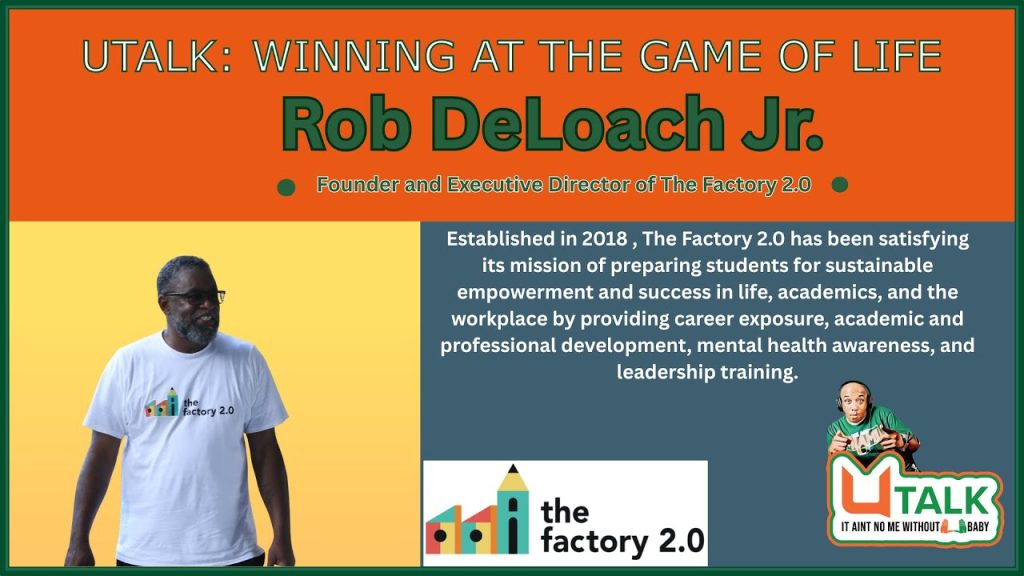
That’s the role founders and executive directors of grassroots organizations play. Rob DeLoach Jr. founded The Factory 2.0 and serves as its executive director, and he’s the kind of figure I mean. When people who know a community’s work up close describe someone as a pillar whose impact reaches beyond his home city, take that seriously. That reputation doesn’t come from one viral moment. It gets built over years of showing up.
I won’t pretend to know the inner workings of every program an organization like that runs, and I’m not going to make anything up. The point holds without the details. The title itself, founder and executive director, tells you somebody had an idea, built a vehicle for it and took on the grind of running it. In community work, running it means fundraising, staffing, scheduling, problem-solving and absorbing every setback personally. It’s the closest thing civilian life has to being a head coach, but without the boosters, the TV contract or the sold-out stadium.
Why Sports Fans Should Care More Than Anybody
Here’s where I’ll push on my own people. Sports fans are some of the most loyal, passionate and organized communities on the planet. We’ll travel across the country for a road game. We’ll argue for hours about a coordinator hire. We’ll learn the name of a three-star safety from a high school we couldn’t find on a map.
Now picture that energy pointed at the people building pipelines in our own backyards. If a fan base can will a stadium into a hostile environment, it can will a community center into a funded, fully staffed, thriving space. The loyalty is already there. The question is where we point it.
Sports culture also has a habit of claiming community builders after the fact. When a player makes it, we tell the story of the coach, mentor or program director who kept him on track, and the room gets emotional. That’s beautiful. But we tell it in the past tense, after the pro contract and after the draft-night hug. The people doing that work right now, this week, in 2025, need the support in the present tense.
“It Ain’t No Us Without You” Is a Philosophy, Not a Catchphrase
The U Talk crew has a line they use to open shows: “It ain’t no us without you, baby.” I’ve heard it plenty, and I think it says more than people give it credit for.
Flip it around and look at it from a community builder’s chair. No program, no team and no movement exists without the people it serves. And no fan base, at any level, exists without the infrastructure that raised its people up. The stars on Saturday came from somewhere. So did the families in the stands, the kids who’ll be wearing jerseys in ten years and the coaches who’ll lead them. Pull the community builders out of that chain and the whole thing gets thinner, weaker and less like home.
That’s why I want sports talk, Canes talk included, to make room for these conversations without treating them as a detour from “real” sports content. They are the real sports content. They are the roots. Talking about them during camp, with the first kickoff of the 2025 season right around the corner, isn’t a distraction. It’s a reminder of what the kickoff is supposed to stand for.
The Long Conversation Is the Point
The sports media machine runs on quick takes. Thirty-second clips, hot reactions and ranked lists. Community work doesn’t fit that format, and that’s exactly why it gets overlooked. You can’t explain the build, the struggle and the vision behind an organization in the time it takes to read a tweet.
That’s why I give credit to any platform willing to sit with a guest for the long haul and let the story breathe. When a show is willing to spend well over an hour with someone like an executive director, the audience gets something rare: context. The why behind the work, not just the what. That’s how fans turn into supporters and supporters turn into participants.
Your Fall Camp Assignment
So here’s my challenge to the Canes faithful, and honestly to every sports fan reading this as the 2025 season approaches. Keep the energy for the depth chart. Keep the takes hot. Keep circling dates on the calendar. But give yourself one more assignment before kickoff.
Find the pillar in your own city. Find the founder, the director or the coach running a program on a shoestring for kids who need it. Learn their name the way you’d learn a recruit’s name. Follow their work the way you’d follow a transfer portal saga. Show up for them the way you show up on game day, whether that’s a donation, an hour of your time or just telling their story louder.
The scoreboard will take care of itself on Saturdays. The foundation underneath it needs us every day of the week. That’s what the swagger was always about. It ain’t no us without them.
This take grew out of this week’s U Talk Sports Show conversation with Rob DeLoach Jr., founder and executive director of The Factory 2.0. If you want to hear a community builder tell the story in his own words, it’s worth the full listen.
This take grew out of the August 13, 2025 episode — watch it here: Founder and Executive Director of The Factory 2.0 Rob DeLoach Jr