
Here’s something every Canes fan should keep in mind this week, while the timeline fills up with the same tired lines on repeat: nobody spends this much energy tearing down a team they think is irrelevant. Nobody writes thread after thread about a squad that’s going nowhere. Nobody demands a program “play somebody” when that program is already losing to everybody. The noise around Miami in the 2026 season is loud for one reason. People are paying attention again. And plenty of them don’t like what they see.
So let’s turn it around. Stop reading the “Miami hasn’t played anybody” crowd as critics and start reading them for what they are. They’re receipts. They prove the Canes are back in the national conversation, and that some people really wish they weren’t.
The Script Writes Itself
If you ride with The U, you know the lines by heart now. Miami hasn’t played anybody. Miami has been beating high school teams. Look at that strength of schedule, it’s sitting in the 60s. Y’all need to play somebody before you start talking.
Look at what those lines have in common. None of them say Miami can’t play. None of them say the Canes are soft, slow, undisciplined or poorly coached. Every single attack goes after the opponent, not the team on the field. That’s not an accident. When critics can’t find a problem with what you’re doing, they go after who you’re doing it to. It’s the oldest move in college football, and Miami has been on both sides of it long enough to know exactly what it means.
That’s the first thing to understand about the 2026 discourse. The criticism is a concession hiding inside an insult.
Nobody Picks a Schedule in October
Now to the actual complaint, because it deserves a real answer and not just a shrug.
College football schedules aren’t put together on the fly. Conference rotations and nonconference contracts get locked in years ahead of time, often long before anybody knows which programs will be up and which will be rebuilding. When Miami’s 2026 slate was set, no one in Coral Gables was looking into a crystal ball, picking which opponents would be down this fall and lining them up. That isn’t how it works for Miami, and it isn’t how it works for anybody else.
So when someone tells the Canes to “play somebody,” the honest response is: who, exactly, and when? The opponents are on the schedule. The dates are set. Miami’s only job is to show up and handle whoever lines up across the field that Saturday. You can’t reach back in time and swap opponents. You can only take care of business.
And if the business is getting taken care of, the problem isn’t in Miami’s locker room.
The ACC Changed Around Miami
This is the part of the argument the haters skip on purpose. A big reason Miami’s schedule looks softer on paper is that the conference around it has changed.
Not long ago, Clemson and Florida State were the gold standard of the ACC. Those were the games you circled. Those were the measuring sticks, the matchups that told the country whether a team was for real. If those programs aren’t what they used to be, how is that on Miami? The Canes didn’t make Clemson and Florida State come back to the pack. They just kept showing up while the landscape shifted.
It’s a strange kind of logic. Miami gets blamed when its rivals are good (“see, they can’t beat the big boys”) and blamed again when its rivals slip (“see, they haven’t played anybody”). There’s no version of that argument where the Canes come out ahead, and that tells you the argument was never really about football.
The conference slate this fall includes names like Stanford, part of an ACC that looks nothing like the league some of us grew up with. It also includes teams that deserve real respect. Wake Forest is doing pretty well right now, and acting like every game on Miami’s schedule is a walkover takes credit away from the programs that have actually earned it. You can’t call the whole schedule a cupcake tray and then ignore the teams on it that are winning.
Why This Matters More Than Pride
Some fans will say, who cares what the haters think? Let them talk. Fair enough. But this conversation matters, because strength-of-schedule talk doesn’t stay on social media. It shapes perception, and in modern college football, perception has real weight when everybody starts arguing about who belongs where at the end of the year.
That’s why Canes fans can’t just roll their eyes and move on. When the “they haven’t played anybody” line gets repeated enough, it starts to sound like analysis instead of a talking point. The best pushback isn’t louder trash talk. It’s context. Schedules are set years out. The ACC power structure has shifted. Some of these opponents are better than the narrative gives them credit for. And a team can only beat the opponent in front of it.
Say that calmly enough times and the hot takes start looking as empty as they are.
What Miami Actually Controls
Here’s the part every fan should hold onto. Miami doesn’t control the schedule. Miami doesn’t control the rankings, the TV talking heads, or whoever is posting at two in the morning. Miami controls preparation, execution and how it finishes. That’s the whole list.
The way to answer “you haven’t played anybody” isn’t with a press release. It’s with dominance that can’t be explained away. Win the way great teams win: clean, physical, no letting inferior opponents hang around. When the margin speaks for itself, the strength-of-schedule crowd loses its grip on the story. And when the bigger stages show up, as they always do for a program with Miami’s history, that’s when the receipts get cashed.
Until then, the Canes are doing the one thing that’s in their hands. Lining up and handling the next team on the list.
Miami vs. Everybody Is a Feeling, Not a Slogan
There’s a reason “Miami vs. Everybody” hits so hard with this fan base. The U has always lived a little outside the polite part of college football. The swagger, the history, the way the program carries itself, it has always made people uncomfortable. When Miami is down, folks are happy to leave it alone. When Miami starts rising, the knives come out.
So if 2026 feels like the whole country has an opinion about the Canes, take that as a sign, not an insult. The anger is attention. The attention is relevance. And relevance is exactly where this program is supposed to be.
The best thing the U Talk family can do right now isn’t to get defensive. It’s to know the facts, keep it a hundred, and let the haters keep doing the free promotion. Be specific: the schedule was set years ago, the ACC shifted, and some of those opponents are better than they get credit for. Then sit back and watch the Canes keep handling business.
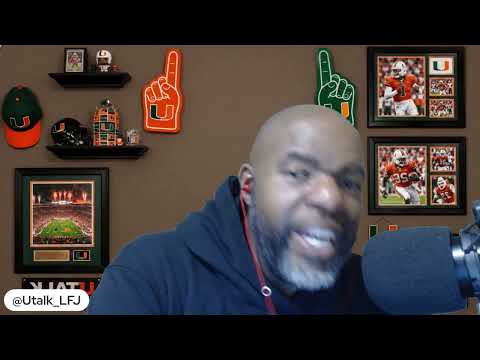
This take grew out of this week’s episode of Utalk’s Extra Point with LFJ, “Miami vs Everybody!! Why is everyone mad at The Canes??”, a quick Tuesday-morning conversation that kicked off a bigger discussion about why the hate for Miami is louder than ever.
This take grew out of the November 3, 2026 episode — watch it here: Miami vs Everybody!! Why is everyone mad at The Canes?? Utalk’s Extra Point with LFJ